Thursday, 21 December 2017

Tuesday, 19 December 2017

Review: Joan: The Remarkable Life of Joan Leigh Fermor

Joan: The Remarkable Life of Joan Leigh Fermor Joan: The Remarkable Life of Joan Leigh Fermor by Simon Fenwick
My rating: 4 of 5 stars

A copy of this was provided free of charge from the publisher in return for an honest review.

Patrick Leigh Fermor has been described as one of our greatest travel writers. His walk across Europe in 1933 from the Hook of Holland to Constantinople as well as his books on Greece and the Caribbean have rightly become classics. Apart from the most fleeting of mentions, what was missing from his books though was his companion of almost 60 years, Joan.

Joan Eyres Monsell was a member of the lower aristocracy and second daughter to Viscount Monsell who in his time was an MP and First Lord of the Admiralty. Their family home was Dumbleton in Worcestershire. She grew up as most of her contemporaries did at the time, became a debutante and moved in privileged circles and mixed with the 1930s bohemian set. Even though her family were wealthy and well-connected, she differed from those around her because she earned her own living as a photographer. This was to take her America and Russia, earning her more column inches in the gossip columns.

She first came across Paddy, as he called himself, in 1944 during the Second World War when she was working as a cypher clerk in Cario, where he was lauded for his success in kidnapping General Kreipe. At this moment in time, she was still married to John Rayner, but the marriage by that point had hit the rocks. They were to fall deeply in love with each other. They travelled widely together and separately and spent a fair amount of time back in her family home of Dumbleton, but they were to put down deep roots and make their home together in a house that PLF designed in the village of Kardamyli, southern Greece. It was a place that drew others for parties, discussions, companionship and where Paddy and others were to write books that have now become classics.

It is a revealing biography of a bold and confident woman who never stood in the shadow of Leigh Fermor, but was his soul mate and closest confident until her death in 2003. Her income supported them both as he became better known as a writer and it was her inheritance that enabled them to build their dream home. Fenwick has managed to draw material from her archive to give us a sense of her character, her fears, the society that she was born into and her desire of wanting a family and to settle down with the man that she loved. Even though we know more than ever about Joan, she still manages to defy categorisation and still remains a little aura of mystique. Excellent biography of Joan Leigh Fermor, a woman no longer unknown. 4.5 stars

View all my reviews

Friday, 15 December 2017

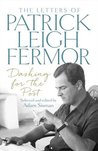
Review: Dashing for the Post: The Letters of Patrick Leigh Fermor

Dashing for the Post: The Letters of Patrick Leigh Fermor Dashing for the Post: The Letters of Patrick Leigh Fermor by Patrick Leigh Fermor
My rating: 4 of 5 stars

Patrick Leigh Fermor rightly lays a claim to be one of our greatest travel writers. He is most famous for his walk across Europe in 1933 from the Hook of Holland to Constantinople. It was distilled down to three books; A Time of Gifts, Between the Woods and the Water and then the final volume published after his death, The Broken Road and tell the story of a Europe now lost and the beginning rumbles of war and tension across the continent. Other travel books that he wrote were about the country that he fell head over heels in love with, Greece and of his travels around the Caribbean.

He was also a great writer of letters; this was a pre-internet day, and international phone calls were problematic, to say the least, so this was his way of keeping in touch with his wide circle of friends and acquaintances. Adam Sisman has spent hours pouring over the material from the National Library of Scotland and private collections of Patrick Leigh Fermor's letters to bring us this fine collection and insight into his character and passions.

Leigh Fermor writes to all manner of people in this collection, but there are several names that crop up regularly, Xan Fielding, Lawrence Durrell, John Betjeman and his wife Joan. There are letters to lovers, including Balasha Cantacuzène, a Romanian princess and a large number of apologetic letters to the publisher John Murray as another deadline for a book sailed by. He used them to inform people of the latest projects he was working on, to develop ideas, to sort out his social life and organise the steady stream of visitors to his Greek home.

This is the second collection of letters by Fermor, the other is In Tearing Haste written from the Duchess of Devonshire which I haven't read yet. But this collection of letters written from 1940 to 2010 by a master of prose is really quite special. They have a different style of writing to his books, probably as he never anticipated them being published, but they are entertaining, amusing and demonstrate just how gregarious and full of fun and life he was. I didn't realise that he used to frequently stay just outside Wimborne and these letters show just how he could mix with the great and the good as well as the local peasants and be accepted by all of them. Definitely one for the fan of Leigh Fermor, but also would appeal to those that want to learn about the character of a fascinating man.

View all my reviews

Tuesday, 12 December 2017

Review: The Mysterium: Unexplained and extraordinary stories for a post-Nessie generation

The Mysterium: Unexplained and extraordinary stories for a post-Nessie generation The Mysterium: Unexplained and extraordinary stories for a post-Nessie generation by David Bramwell
My rating: 4 of 5 stars

A copy of this was provided free of charge from the publisher in return for an honest review.

People are drawn to the strange and the unknown, those stories that even after a second time of hearing make little sense. Some of these are deeply rooted in our oldest legends, but there are a number of mysteries and contemporary folklore that still managed to defy explanation in our modern, always connected, internet age.

In the Mysterium, we will encounter mysteries that have been around for years like the number stations, tragic deaths that no expert has been able to explain such as when a girl was found in the water tank of a hotel after CCTV showed some very peculiar behaviour when she was in the lift. There are entities that have slipped from the virtual domain to become the elements of our nightmares and words that appear embedded in the road. We will learn from those that hear a hum in the place that they live, and of dunes that sing, You may have heard of the darknet, a place where various nefarious activities take place but have you have ever heard of the Deep Web? Me neither.

Some of the stories that David Bramwell and Jo Keeling have collected are seriously creepy and they have managed a fascinating sum up of the current raft of mysteries and what can now be considered modern folklore. It is nicely written as they take care to explain the background to the story. I particularly like the way that they have given pointers to other things that you go and read or watch if a specific tale interests you. A great little collection of the truly bizarre.

View all my reviews

Epic #BookPost

Some of the books I won last week and a copy of Doughnut Economics that Cornerstone kindly sent me.


Saturday, 9 December 2017

Review: Belonging: The Story of the Jews 1492–1900

Belonging: The Story of the Jews 1492–1900 Belonging: The Story of the Jews 1492–1900 by Simon Schama
My rating: 3 of 5 stars

This second volume of Simon Schama's history of the Jewish people begins in the ghettos of Venice where the Jews of the Iberian peninsula had ended up after being expelled. Those that had not escaped were forced to convert and even then were still persecuted. This search for safety and somewhere to live where they could carry on with their lives in peace had been a pressing concern; and as this book explains in some detail, the theme of moving, settling, suffering and moving again, would keep repeating for the next few hundred years.

The story that Schama tells is as epic in scope as it is global. We travel with him all around Europe, into the cold of Russia, across the Atlantic to the New World of America and venture into the privileged upper-class world of the English aristocracy. He tells of those that lost children as they were conscripted into the army, those that found peace before the winds of change in Europe blew through once again, those that suffered for their faith and those that fought back. Even though this is a sweeping history of a people, he concentrates on individuals and specific events to explain the wider history the Jews.

This is a huge book, at around 800 odd pages long and Schama goes into huge amounts of detail as he tells his stories of the Jewish people. Some of it is fascinating, but there were times when I felt like I was wading through it as he expanded on the minutia as the events unfolded. It is one that I feel some sort of accomplishment having read it now.

View all my reviews

Thursday, 7 December 2017

Monthly Muse – November

November was a busy month, with lots going on at home, and fighting the last of the woodchip off the walls of the lounge, but I still managed to squeeze in 14 books. Somehow. It is now all painted and looks really good. And here they are:


Following on a recommendation from Kim French and others on Twitter, I got two of Gillian Clarke’s poetry books from the library Five Fields and Zoology. I read very little poetry normally, preferring to wade through various non fiction tomes, but these were quite delightful. She has a mastery of the language that I envy and whilst I didn’t get all of them, the poems felt deeply rooted in her country and personal experiences. I am a huge fan of Robert Macfarlane’s writing and splashed out of a copy of The Lost Words that he has created with the artist Jackie Morris. It is a children’s book, but a finely crafted and richly drawn and imagined one as they seek to re-introduce children to the delights and wonder of the natural world. Peter Davidson’s book The Last of the Light: About Twilight looks at the artistic and literary response to the period of gloaming that happens every day. It is a finely produced book from Reaktion with high-quality reproductions of the art that he is discussing. I had reserved Ben Aaronovitch’s latest book from the library and was quite surprised when it came through really quickly. The Furthest Station find Peter Grant back in London trying to find out what has spooked the regular ghosts on the Metropolitan Line. Another cracker in the Rivers of London series and was just too short really!

It was #NonFictionNovember too, a social media tag run by Olive and Gemma. Most of my reading is non-fiction and in total,  read a further nine non- fiction books. I had the last two or three to read on the shortlist for the Baillie Gifford Prize, and I am still wading my way through the largest, Belonging. I struggled a little with The Islamic Enlightenment by Christopher de Bellaigue which was a history of the way that Islamic countries have ebbed and flowed between having a strong faith and social change, Whilst there were elements that were interesting, it didn’t come across as a book for the general no fiction reader. Much, much better though was Kapka Kassabova shortlisted book, Border: A Journey to The Edge of Europe. In this she travels back to her home country to see what the border is like at the very edge of Europe. She has a wonderful considered prose and manages to tease the stories out of the people that live in this area.

Behind the Beautiful Forevers by Katherine Boo was a very good book about the people of the slums in Mumbai and how they are eking a living out finding scrap materials that they can get a few rupees for, it was a well-written book about what could be a harrowing subject. Bonita Norris’s memoir, The Girl Who Climbed Everest, is as much about her expeditions climbing some of the highest mountains in the world as it is about the lessons that she learnt and made her the person she is today. The Anticipatory Organization by Daniel Burrus was a reasonable business book with an interesting premise about teaching us how to look for trends in the wider world and making the most of them.

Managed to read four natural history books too, the first was a wonderful book about the Orca, called Of Orcas and Men. In this David Neiwert tells us some the history and what we understand about their habits, the shameful act of keeping these magnificent creatures and describes his encounters with them when kayaking. Sooyong Park has spent two decades of his life tracking and studying the elusive Siberian tiger. He has written a book about it too, Great Soul of Siberia, which is as much about his obsession as it is about this huge feline. Last were two books on woodlands, A Wood of One's Own is the tale of Ruth Pavey and the wood that she owns, quite a lovely book, and I have serious envy! Oak and Ash and Thorn is really lovely too, Peter Fiennes takes us round the country visiting some of our finest woodlands and ends it with a call to arms to save a rejuvenate our tree cover in the UK.


Didn’t have one book of the month this time but two, The Furthest Station and Border. Buy them and read them as soon as you can.