Tuesday, 8 May 2018

Review: The Man Who Climbs Trees

The Man Who Climbs Trees The Man Who Climbs Trees by James Aldred
My rating: 3 of 5 stars

A copy of this was provided free of charge from the publisher in return for an honest review.

It has been a long while since I climbed a tree, but in my childhood, I spent a fair amount of time climbing and occasionally falling out of trees. There were one or two that were particularly good to climb or hide in and several that we tried and failed at. To reach the top of a small tree felt like an achievement, even though the heights weren't that high, it felt like you were on the top of the world. James Aldred began the same way, climbing trees in the New Forest until at the age of 17 he went with two friends to ascend using rigging and climbing gear to climb a tree where the lower branches were totally out of reach from the ground. At this point, he was hooked and knew what he wanted to do.

Now he climbs trees that are over 150fit high using high tech equipment, taking up cameras and assisting the wildlife cameramen for the BBC and others that are looking to film what goes on up in the canopies of the global forests. With some other expert climbers, he has ascended one of the highest trees in the world, peeking above the treeline around 300 feet up. The risks are enormous, one mistake and it is all over, but it is a job that he loves with a passion. It has taken him to forest all around the world, he has seen animals that have enthralled and amazed him, slept out under the stars many times, been bitten alive by all manner of insects and in on very scary moment was attacked by a harpy eagle. He wouldn't change it for the world though.

Aldred has been very fortunate to work with some of the very best in the wildlife film industry and the stories that he tells in this book will enthral and entertain you.
I am not too bad with heights, but some of the trees Aldred climbs are quite staggering, though the thought of sleeping in the canopy, very securely strapped in, of course, does appeal quite a lot. It is a book that can be categorised in a few ways, but definitely, a book that is worth reading.

View all my reviews

Monday, 7 May 2018

Review: Enduring Love

Enduring Love Enduring Love by Ian McEwan
My rating: 2 of 5 stars

Joe and Clarissa are picnicking when they hear cries from a hot air balloon that was descending nearby. The man controlling it had tried to get out, the rope had caught round his leg and it was rising again dragging him with it. A few men converge on the balloon, grabbing hold of the ropes hanging down to try to hold it down, but one by one they drop off. One man, John Logan, hangs on for as long as he can before he drops off at a height that can only be fatal. They rush to him to see if they can help, but it is too late.
 
In this intense moment, the other man who got to the body at the same time asks him to pray about the situation, but Joe flatly refuses. Jed Parry though is a man possessed, he thinks that something has passed between him and Joe and in the moment that they shared that Joe has fallen deeply in love with him. He thinks nothing more of it and heads home but is slightly disturbed when he receives the first phone call from Parry at 2 am. From this moment Parry begins stalking Joe, writing letters to him, leaving countless messages on his answerphone and standing outside his flat. Joe is severely unnerved by it and Clarissa thinks he is losing his mind but the police aren't interested as he has done nothing wrong
 
He meets with Parry briefly, but it only exacerbates the situation. Pushed to that absolute limit, Joe snaps and sets about taking matters into his own hands. Then he gets a phone call from Clarissa; Parry is with her and wants Joe to come home to talk.

McEwan has written a book about those suffering from de Clerambault's syndrome a delusional disorder where an individual thinks that person is infatuated with him or her, thankfully it is rare, but as McEwan does in this book when coupled it with religious fervour, it has a deeply sinister edge. There is plenty of tension in the plot as Parry becomes more extreme in his actions to be with Joe. It is very creepy, as McEwan manages to convey just how disturbing stalking is for any victim of it. There are a couple of sub-plots that really didn't add much to the story either. However, there were several details that I couldn't get along with, in the book; I didn't quite understand as all these men ran to save the balloon with the child in, how they knew each other almost immediately, the balloon is described as a helium balloon later in the book too. Not bad, but could have been so much better.

View all my reviews

Friday, 4 May 2018

Monthly Muse - April

I managed to up my game last month and with the help of a weeks holiday got twenty books read. 20!! There is a little bit for everyone here, including most of the Wellcome Prize shortlist. So behind on reviews at the moment so some of these are not reviewed yet, but here we go:


Our present economic system is broken, it cannot predict the future and the way it is set up, it is consuming vast amounts of resources with no plan for sustainablilty. Rathworth is proposing that we adopt a system that considers the limits the earth can manage, the outer ring, with the minimum acceptable living standard for the global population. Well worth reading, though I am not sure just how much will happen just yet with the vested interests in control.


The cuckoo is one of our most distinctive migrants that most people have never seen, but who would instantly recognise the call of. Nick Davies is obsessed by them (to put it mildly) and this book tells the stories of his observation and experiments on the cuckoos of the fens. Fascinating stuff, and even though he is a Professor, it doesn't read like an academic paper


The universe that Fenn has created with the Sidhe, a forgotten race that still controls humans covertly reaches its finale in this the fifth book. A fast-paced sci-fi thriller that twists and turns right until the end


This is a loose tie-in to the TV series, that explains the actual story behind the fictionalised account that became the Corfu Trilogy. Lots of details and photos of the Durrell family in their homes in Bournemouth and Corfu


Maxwell had written several books before Ring of Bright Water became a massive bestseller. But his life story as a minor aristocrat, traveller, closet homosexual and consumer of vast amounts of whisky wasn't really known until his friend Douglas Botting told it in this book. It is brilliant too and this reprint by Eland in their distinct style is still worth reading.


Normally books about hostage taking are fast action thrillers that demand page turning rapidly as the plot races ahead. This isn't like that; the slow pace after the hostage-takers realise their there target isn't there allows the building of characters and some unexpected events.


A tragic balloon accident brings two men together, one who becomes obsessed with the other and begins to stalk him. This external pressure starts to unravel his marriage and sanity Until it reaches a dramatic climax. Wasn't so keen on this book though as there were several parts that didn't make sense.


Leon has just had a baby brother. who unlike him, is white. After his mum suffers a breakdown, they are both put into care and shortly after his brother is adopted, never to be seen again. The lady looking after him ends up in hospital, he is passed to her sister. Whilst he is fond of her, he still wants to bring his family back together again, and maybe the guys at the allotment might be able to help him with that. Poignant stuff about the care system in the 1980's.  


Patagonia sits astride two countries, Chile and Argentina and is a place that people go to to make or lose a fortune. In this classic travel book, Chatwin follows the stories around the bottom part of the American continent. Not as much of the place as I had hoped, but still worth reading.


This was a Wellcome Prize shortlisted book. Drug addiction routinely devastates families across the UK and it even happens at the very highest level of society. This is the story of Hans and Eva Rausing and their descent into addiction, Eva's death and the public attention in the story seen from the eyes of Sigrid, Han's sister. She is brutally honest about her own life and the failures in helping Hans and Eva, but also now understands the limits of what she could actually do at the time. 


This was a Wellcome Prize shortlisted book. This is a story full of love, life, death, tragedy with uplifting moments set in Nigeria of a womans desire to have a child to fufill her husbands families wishes. It is full of the politics of the country as a turbulent backdrop. Yejide is in between cultures as the old Nigerian ways clash with the new world and Western medicine and there is plenty of deceit and lies as the plot twist and turns and the truths are laid bare. 


This is the last book that the late Helen Dunmore wrote and it is a return to the origins as it is poetry. Like with all poetry there are some that I like and other that I didn't quite get. Mostly enjoyable though


This was a Wellcome Prize shortlisted book about the advent of modern surgery and clinical practices. If you were admitted to a hospital back in the Victorian era, then you stood as much chance of dying of your care as you did from the original problem. It does not hold back on the blood and gore, so not one to read whilst you're eating, but it is very good and from what the author said to me, may be made into a film.


Over 60 years ago, the chances of people surviving common illnesses were fairly low, but with the advent of effective vaccines then public health improved dramatically. This book is the story of the creation of those vaccines that have saved billions of lives around the world. It does get quite technical at times so might not be for everyone.


There are three things that are certain in life; taxes, your computer crashing and death. The final one of these is almost taboo now days but in this book Mannix tell the stories of those who have reached the end. Most are old, some are painfully young, but each family has come to accept the passing of their loved one with her and her teams help. A very moving book.


Spring is the most dynamic of seasons. The starkness of winter is thrown off with the new shoots, the longer days warm the earth and the annual migration of millions of birds from winter sites to breeding grounds begins. Rose follows the changing season from the very south of Europe across 35 degrees of latitude to the northern coast. Not a bad book overall.


People have spent ages messing about in boats, and after his friend, James made a two-seater canoe, it was time for Matt Gaw to join that gang. It is an entertaining and thoroughly enjoyable read about the journeys that make on rivers near and far just because they can.


 has run the Aigas Field Centre for a long while now, but this is the story of his journey to that place so dear to his hear. He tells of the medical struggles that his mother had with her heart, of the frankly horrific school system of the day, and finding happiness at one in Lyme Regis Dorset, where the natural world came alive to him. There is, of course, Gavin Maxwell and the attempt to create a zoo on the Isle of Skye as well as all the animals that passed through his hands as a child. 


So that was it! any her that you have read, or now want to read? Let me know in the comments below

Thursday, 3 May 2018

Review: The Valley at the Centre of the World

The Valley at the Centre of the World The Valley at the Centre of the World by Malachy Tallack
My rating: 4 of 5 stars

A copy of this was provided free of charge from the publisher in return for an honest review.

Shetland has a bleak beauty about it, scoured by storms that roll in from the Atlantic, it shapes the landscape as much as it does the people that live there. For some islanders, it is the only place that they have known and they would never leave it, but the population in the scattering of houses in a valley is slowly ebbing away. David, a third generation crofter, live in one of the houses in the valley. It is a place that he would never leave; the island is as much a part of his DNA as the skills that he learnt at his father and grandfathers side and he takes every day as he finds it. Their daughter Emma was in the house next door, but she has headed south to Edinburgh, leaving her ex-partner, Sandy, learning the essential elements of crofting from David. Terry lives nearby, separated from his wife and son, he is seeking comfort in the bottle. Maggie, who is well in her eighties and the oldest resident of the valley, lives just up the road and there is Alice, formerly a bestselling writer and a newcomer to the island and the valley; she is there for the solitude and still bereft after losing her husband to cancer.

As much as things remain the same, there is change in the air. A property becomes available after a resident dies; Ryan and Jo, a young couple with their own difficulties move into the valley and change the dynamics of the relationships that had developed. At the centre of them all is David who takes everything in his stride with a calm and patient outlook.

If you are expecting a dynamic plot then this might not be for you; this is a book where you get to explore the way that characters change as the circumstances flow. There is plenty of tension in the book, some from the complex relationships of the small number of characters
and other tension reflecting how tough it can be to live there. Reading the accents of the locals does take a bit of getting used to, but it does give authenticity and atmosphere to the narrative. The other star of the book is the place. Tallack's prose through the book that Alice has begun to write as she emerges from grief describes the land and seascape of the island and the life that survives and thrive there. I think his non-fiction just has the edge for me, 60 degrees north is an excellent travel book, and I would urge you to read it. However, this proves that he is capable of much more as a writer, and I think can sit happily alongside his contemporaries like Melissa Harrison who write fiction with strong natural history undertones. Looking forward to the next book he writes now.

View all my reviews

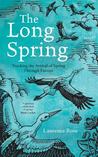
Review: The Long Spring: Tracking the Arrival of Spring Through Europe

The Long Spring: Tracking the Arrival of Spring Through Europe The Long Spring: Tracking the Arrival of Spring Through Europe by Laurence Rose
My rating: 3 of 5 stars

At the very south of Europe spring begins around early February, and often on San Blas Day, you will hear the clattering as the first storks arrive back on the continent. These are the first of many migrants that will appear over the next couple of months, escaping the heat of Africa and heading to their summer breeding grounds. There seems to be a reverse logic to all of this as some of the smallest birds undertake the longest journey's around our planet twice every year.

Beginning at the Straits of Gibraltar at the latitude of 35 degrees, Rose with follows these feathered migrants through Spain, into France and onto the UK. From there he heads to Scandinavia, to visit Sweden, Finland and Norway where his journey ends in May at Finnmark. His impressive journey visiting places where these migrants fly land is assisted by the latest technologies that mean he can track them in real time from his phone maximising the number and variety of birds he sees. He notes that the dates that these arrive are getting earlier year on year and there are now birds who now can overwinter as climate change grips our planet. Rightly so, he gets angry at some of the nature reserves and sanctuaries as an ideal place to shoot the birds that have a tough enough journey as it is around our planet.

Journey's end is 35 degrees further north, where the long winter flips briefly into spring before the short summer. It is close to the dawn of the 24 hour day on the very edge of the Arctic Circle. Rose has written an interesting book about following the advent of spring from the very south of Europe to the furthest north as life returns as the days lengthen and the sun warms the land again. He has an eye for detail as the book is full of facts and details of the birds and creatures that he saw and stories of the people he meets and places that he visits. Even though he tries bear spotting and there are snippets of information about other animals, it is very much bird centric, which is fair enough given Rose's background at the RSPA. The writing didn't sparkle for me, but it still makes for interesting reading and it is a good companion volume to Walking Through Spring by Graham Hoyland.

View all my reviews

Wednesday, 2 May 2018

Review: The Pull of the River: Tales of Escape and Adventure on Britain's Waterways

The Pull of the River: Tales of Escape and Adventure on Britain's Waterways The Pull of the River: Tales of Escape and Adventure on Britain's Waterways by Matt Gaw
My rating: 4 of 5 stars

A copy of this was provided free of charge from the publisher in return for an honest review.

People have their lives filled with constant interruptions and phones demanding attention constantly, tearing from one place to another, we rarely take the time we need for ourselves. Mat Gaw decides that is time to discover another speed to his life and with his friend, James, seek the tranquillity of his local river in their homemade nautical red canoe, Pipe, the colour of Mae West’s lips supposedly…

People have been drawn to rivers for millennia, not only do they hold an essential element to life, they have always had a spiritual dimension too and often now are used for all sorts of leisure activities. Travelling in a canoe on a river or canal is a silent way of moving through the town and countryside and offers a startling new perspective of the places that they thought they knew well. From their local rivers, they head to Britain's longest and best-known ones, The Thames and the Severn, further afield to the south-west on the River Otter and across Scotland's great glen.

They get wet as you'd expect after falling in several times, get stuck in the mud, beached, bitten alive by midges, failing to see Nessie, brushing through the branches of willows, racing the rapids and have a couple of very scary moments. Sometimes they make time to talk when paddling, at other times the only sound they make is the gentle splash of the paddles as they sit in silence discovering just how much wildlife is there when you sit quietly and wait for it.

It was a really enjoyable book, written with humour, a wry wit and a keen eye as he describes the land and waterscapes that they pass The context of the book is wider than that though, his research of the rivers uncovers those nuggets of information of the historical and cultural terrain that overlays the rivers and that makes this a much richer read as they paddle along. I also found it refreshing as Gaw brings no personal baggage to his watery voyages; it is just him and his friend taking the time to immerse themselves in the natural world, sleeping out under the stars and rediscovering a place where time moves at a very different rate to modern life; a world that few people see now days.

View all my reviews
Tuesday, 1 May 2018

Welcome Book Prize Announcement

I'd read the shortlist, with my fellow bloggers chosen a winner, To Be A Machine, and I was fortunate to be invited to the prize announcement at the Wellcome Collection in London. As it costs a fair amount to get from Dorset to London, I'd thought that I'd make a day of it. Popped in to see Blake and Clare at Head of Zeus and then next tube stop was Matt at Duckworth. Had a very quick bite to eat and then headed north to see Simon at Big Green Books as I promised him I would pop in one day. Purchased his book, signed of course, and then headed south to Euston.

I was meeting up with two of my fellow bloggers from the Shadow Panel, Rebecca from Bookish Beck and Clare from A Little Blog of Books. Quick look around the shop and a natter over a coffee and it was time to head upstairs to the library and for the formal event to begin. Drinks were acquired and canapes consumed and we listened to jazz and shouted at each other over the noise. Edmund de Waal came on after around half an hour and started the preamble and introductions. Each of the judges introduced the books, presented the authors with a bouquet quoted from it. Photo's (slightly blurry sorry) below:


and the winner was:


Which Max Porter accepted on behalf of Mark as his wife was in the process of giving birth to their second child. It was a highly amusing speech too. It was the one we picked too so we were quite chuffed, to say the least!

After the announcement had been made more drinks were brought around and the authors moved into the crowd to talk. Spoke to several of the authors and was even complimented by one on my review, which I probably blushed quite a lot at!


It was quite an experience and one that I feel privileged to have been invited too, we even got a free goody bag on the way out too. Overall a cracking day in London and I am hoping to be invited to another prize giving soon!